Tuesday, April 9, 2013

Journal - APRIL 18 @ 9pm


Q3: Journal Reflection

Instructions: 10th grade teams – I hope the expectations below help expand your journal entries on the blog.

1. Your journal must cover CONTENT from our Theatre History units. Guiding questions:
·         What was covered?     
·        
What did I/we do?
·         How did we do it?

2. Choose SPECIFIC EXAMPLES that will help answer the following:
·         What was challenging about the content?
·         What aspects of the content have I mastered?
·         What have I learned about myself through the ease/challenge of the content?
·         What new beliefs, skills, or knowledge have I acquired?

3. You must CONNECT our work to your life:
·         Where and when in my life can I apply my new beliefs or knowledge?
·         How does the theatre content relate to my goals for the quarter, high school, or the future?


4. You must reflect on your work in the quarter. It will also be in your best interest to reflect on your peers work:
·         What FEEDBACK have I received this quarter from my peers?
·         What FEEDBACK have I given to my classmates?
·         How have I learned from my mistakes? Have my peers?

5. What are my GOALS for the upcoming theatre unit in Q4?
______________________________________________________

Reflective Journal Paragraph Breakdown
  • Paragraph 1 Introduction and Key Theme for your Reflective Journal. What is your big takeaway about the past quarter? Answer question 1 here as well.
  •  Paragraph 2 (or 3) Examples, Examples, Examples – answer question 2.
  • Paragraph 3 (or 4) Answer question 3 with examples and connections.
  • Paragraph 4 (or 5) Answer question 4 with feedback given and received.
  • Paragraph 5 (or 6) Answer question 5 – goals.
  •  Paragraph 6 (or 7) Conclusion. Tie it all back to your original takeaway and key theme.


Tuesday, March 19, 2013

March Journal - DUE 3/21 @ 9pm

Theatre Arts II!

Now that you have been a part of the re-teach process as a presenter and a student, what do you think? Do you feel prepared for an exam? Do you think your peers genuinely helped you with understanding the material? Was it difficult to teach your peers? What feedback would you give your peers on how they needed to improve their re-teach?

THEATRE HISTORY TIMELINE

Theatre Arts II,

The link below will take you to the cover page of the Theatre History timeline. Scroll to the bottom of the page and click "Continue to Timeline". Be sure the page is full screen. Use the timeline to complete your Spring Break homework.

Step 1: Click link below
Step 2: Scroll to bottom of page, Click on "Continue to Timeline"
Step 3: Use the timeline to complete your Spring Break homework

http://www.glencoe.com/theatre/Timeline/timeline_content.html


Saturday, February 16, 2013

February Journal - Theatre History - Due 2/21 @ 9pm

Hello Agape, Courage, and Nkiru!

Your reflections this month should highlight the current work we are doing in Theatre History and your thoughts on Morality Plays.
I expect 100% from each team! The team with the most journals due on time will win a TREAT FOR LUNCH next week!


PLEASE NOTE!
NKIRU - next week, you have a test on Thursday, February 21st!

AGAPE & COURAGE - your test is on Monday, February 25th.

The content coverred will be on Early Theatre, Ancient Greek Theatre, Ancient Roman Theatre, and Medieval Theatre. It will address all 4 components of our study for these time periods as follows: Acting Style, Theatre Structures(Stages), Society, and Plays & Playwrights.

Do Nows prove especially important pieces of study guides as you will need to know the content that belongs to each time period as well as defining it.

Monday, January 28, 2013

Intro to Greek Theatre

HW #49


For homework, you are to create one page of Cornell Notes OR 'four square' notes from the information gathered on the following website:
http://www.ancientgreece.com/s/Theatre/

You should have notes on the following categories:

ANCIENT GREECE PLAYS & PLAYWRIGHTS (you will see the playwrights names in a rectangle on the right of the start of the reading. There should be 4 in total.)

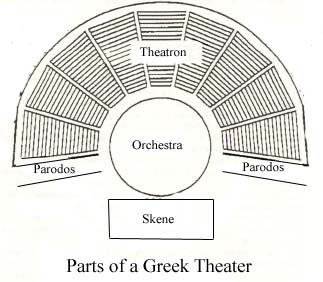
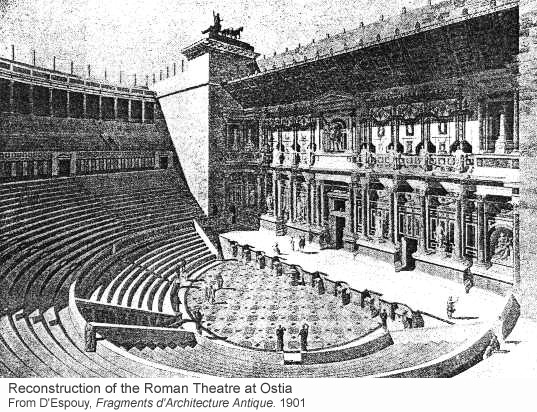
ANCIENT GREECE THEATRE STRUCTURES (ARCHITECTURE)

ANCIENT GREECE ACTING STYLES (INCLUDING USE OF COSTUMES AND MASKS)

ANCIENT GREECE THOUGHT/SOCIETY
Hand in notes in FOLDER the next day YOU have theatre class!

Thank you!

~ Mr. Peterson

Wednesday, January 23, 2013

A FEW REMINDERS!

Please stop by Emory to pick up any assignments you need to complete your Director's Book. Organization worksheets for the Director's Book are in your large packet or in Emory (on the whiteboard) - for example: all mini-assignments up to today and Rehearsal Worksheet/Notes, Scored scripts, etc.

*****Director's Books are DUE Friday, 1/25 by 4pm in Emory!

*****Directing Questions are past due. If you need these questions, please check the whiteboard in Emory.

******OLD JOURNALS (November and December) DUE 1/25 at 11:59pm. After that = 0.

Tuesday, January 22, 2013

January Journal - Due 1/28 @ 9pm

ALL 10th Graders: You have until Monday, January 28 @ 9pm to complete this blog post.

What would you do differently now that your scene production project is over? Why? Explain your answers thoroughly.  Some reasons you may reference: contact teacher, time management, address group dynamic, personal work ethic, etc. Use the Directing Unit vocabulary, acting techniques, and directing approaches below to guide your ideas and writing.


The Director
What is COLLABORATE? 
Directors do this with the actors and designers to share their vision of the play.

What is PLAYWRIGHT? 
The author of a play.

What is the THEME STATEMENT?
A statement that is the spine of the play and expresses how the major elements of the play will unfold.

Who is the ACTOR and DIRECTOR?
Character Analysis is a responsibility for both of these people.

What is CASTING ACTORS, BLOCKING, SHARE VISION WITH DESIGNERS, CHARACTER ANALYSIS?
Director is responsible for many things in a production. These are a few above.

What is SUBJECTIE ANAYLSIS?
1. Does this play excite me? 2. Why does it excite me? 3. Does the play meet my standards?

What is SUBTEXT?
A director always tries to show this; what the text implies but does not actually state.

THE DESIGNERS

What is VISIBILITY?
Primary reason why a lighting designer needs to light the stage.

Who is the COSTUME DESIGNER?
Responsible for: Most importantly:Show evolution of character over time
Second: Research time period of the play 
Third: Build the costumes.

Who is the set designer, costume designer, lighting designer, and sound designer?
These people affect the MOOD AND ATMOSPHERE OF THE PLAY.

What is COSTUME DESIGN? 
Establish Time and Place and Show economic status, just to name a few.

What is FLOOR PLAN or GROUND PLAN?
A bird’s eye view of the set design on stage.

What is TECHNICAL REHEARSAL?
Lighting and Sound rely on this rehearsal to work on their designs.

Who is the Lighting Designer?
Must hide what should not be seen backstage.

THE REHEARSAL PROCESS

What is Dress Rehearsal?
Happens right before Opening Night.

What is NO STOP RUN?
Rehearsal where director waits to provide notes to the actors until after a full performance.

What is OFF BOOK?
Blocking and Lines are memorized.

What is BLOCKING-the actors movement on stage?
This should happen at some point BEFORE the actors are off-book.

What is the CAST MEETING?
Actors are meeting for the first time after being informed of their role and acceptance into the play.

What is a CALLBACK?
After an Audition and before the cast meeting.

What is a DRESS REHEARSAL?
Costumes, Lighting and Sound are running as if the real show is happening, but there is no audience.

DRAMATIC STRUCTURE

What is DRAMATIC STRUCTURE?
This MAINLY shows how the play will unfold.

What is RISING ACTION?
This part of the plot shows what will happen in the play AFTER the “spark” has happened.

What is FALLING ACTION?
This shows what happens as a result of the decision the protagonist has made in the play.

What is INCITING INCIDENT?
Shows what happens to change the normal life of the protagonist.

What is Exposition, Inciting Incident, Rising Action, Climax, Falling Action, Resolution?
The six steps of Aristotle's Dramatic Structure.

What is the EXPOSITION?
We learned the 5 W’s (also known as Given Circumstances) in this part of the dramatic structure.

What are GIVEN CIRCUMSTANCES?
Tracey Swan, Cooking dinner, 7pm in the evening, In her kitchen, Her husband is coming home late. These 5 elements are also known as…


THE STAGE AREA

What are WINGS?
The off-stage areas on left and right of the stage

What are DOWNSTAGE (LEFT, CENTER and RIGHT)
The 3 closest areas of the stage to the audience.

What is BACKSTAGE?
The area behind the stage and curtain.

What is CENTERSTAGE?
The area of the stage that has the most focus, most likely the characterwith the strongest objective in the scene.

WHOSE PERSPECTIVE DO WE REFER TO WHEN USING STAGE DIRECTIONS?
The actor!!

Additional Notes: 
Dramatic Metaphor: An image that helps the direcotr narrow his/her vision of their play
Beats: Mini-objectives in a scene
Predominant Elements: Plot, Characters, Language, Theme, Spectacle, Music
Proscenium View: The audience’s perspective of the stage